
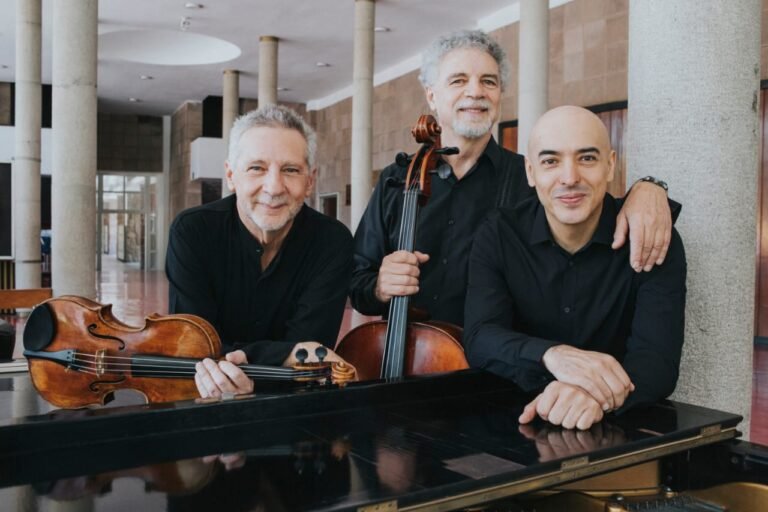
Violinist Arón Bitrán, born in Chile and naturalized as a Mexican citizen, studied at the National Conservatory of Music (CNM) with Vladimir Vulfman and Luz Vernova, as well as at Indiana University in the United States. He has served as a principal professor at the CNM, the Ollin Yoliztli School, and Carnegie Mellon University in Pittsburgh. He currently teaches at the Faculty of Music of UNAM and directs the Chamber Music Workshop at the CNM. He is the creator of the Latin American String Quartet Academy of Venezuela’s National System of Youth and Children’s Orchestras and Choirs, and a founding member of the Cuarteto Latinoamericano.
Cellist Álvaro Bitrán, a two-time winner of the Latin Grammy Award for Best Classical Album, also received the Diapason d’Or Award for his recording of Black Angels by George Crumb. Honored with the Bellas Artes Medal, he is a founding member of the Cuarteto Latinoamericano and has appeared as a soloist with major orchestras throughout the Americas, the United States, and Canada. He currently teaches at the Faculty of Music of UNAM, the CNM, and the Vida y Movimiento School of Music at the Ollin Yoliztli Cultural Center.
Pianist Rodolfo Ritter, also a composer and researcher, won the Gold Medal, first prize, and several special awards at the National Angélica Morales–Yamaha Piano Competition and the International Liszt-Parnassós Competition in 2003. He is a member of Concertistas de Bellas Artes and artistic advisor to the Société Franz Liszt de Genève. His career stands out for the recovery and dissemination of world premiere recordings of European and Mexican composers.
American pianist Sean Kennard has been internationally recognized for his powerful sound, impeccable technique, and profound artistic sensitivity. He has performed recitals and concertos across the Americas, Asia, and Europe, collaborating with ensembles such as the National Orchestra of Belgium and the Sendai Philharmonic.
He has received awards from competitions including the Queen Elisabeth Competition (Belgium) and the Sendai International Music Competition (Japan). His discography spans from Chopin to contemporary music and has been praised by publications such as Gramophone.
A graduate of Curtis, Juilliard, and Yale, he currently teaches at Stetson University in Florida and is a member of the Trio Barclay.

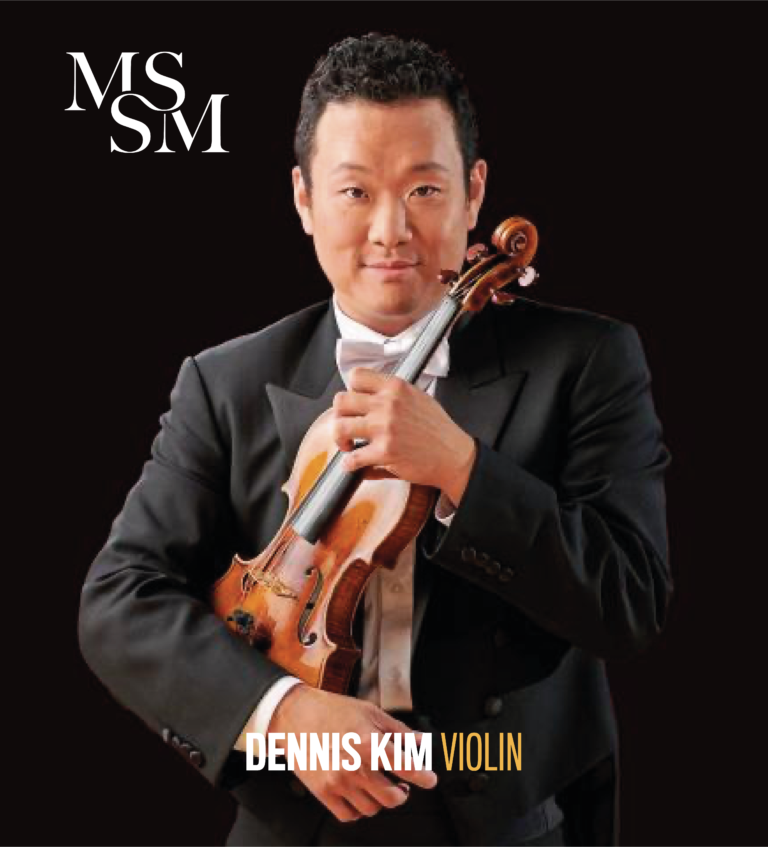
Dennis Kim is an internationally acclaimed violinist and concertmaster, born in Korea, raised in Canada, and trained in the United States.
At the age of 22, he was appointed concertmaster of the Tucson Symphony Orchestra and later became the youngest concertmaster in the history of both the Hong Kong Philharmonic and the Seoul Philharmonic. He was also the first foreign musician to hold this position with the Tampere Philharmonic Orchestra in Finland, and later served as concertmaster of the Buffalo Philharmonic Orchestra in New York. As a guest artist, he has performed with ensembles such as the BBC Symphony Orchestra, the London Philharmonic Orchestra, the Royal Stockholm Philharmonic Orchestra, and the Qatar Philharmonic Orchestra.
He is currently Assistant Professor of Violin at the University of California, Irvine, concertmaster of the Pacific Symphony, and a member of the Mainly Mozart All-Star Orchestra. His artistic work also includes collaborations on Hollywood recording projects with composers such as John Williams and Alan Menken, participating in productions including Star Wars: Episode IX – The Rise of Skywalker and The Mandalorian
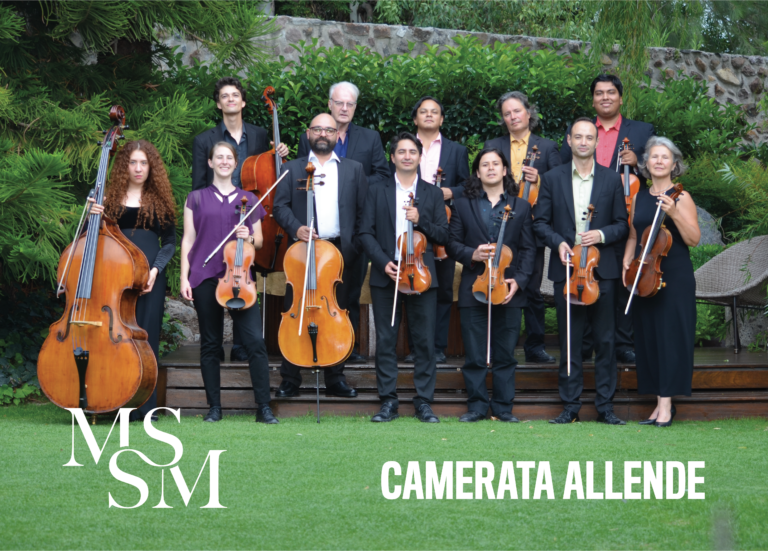
The Camerata Allende is an ensemble of thirteen professional musicians of various nationalities based in the Bajío region of Mexico. Founded in 2024 as part of the Festival de Música de Cámara de San Miguel de Allende, the group has quickly established itself as one of the most distinguished ensembles in the field of classical music in Mexico. Its mission is to cultivate new audiences and promote both Mexican and international repertoire, enriching the country’s musical landscape.
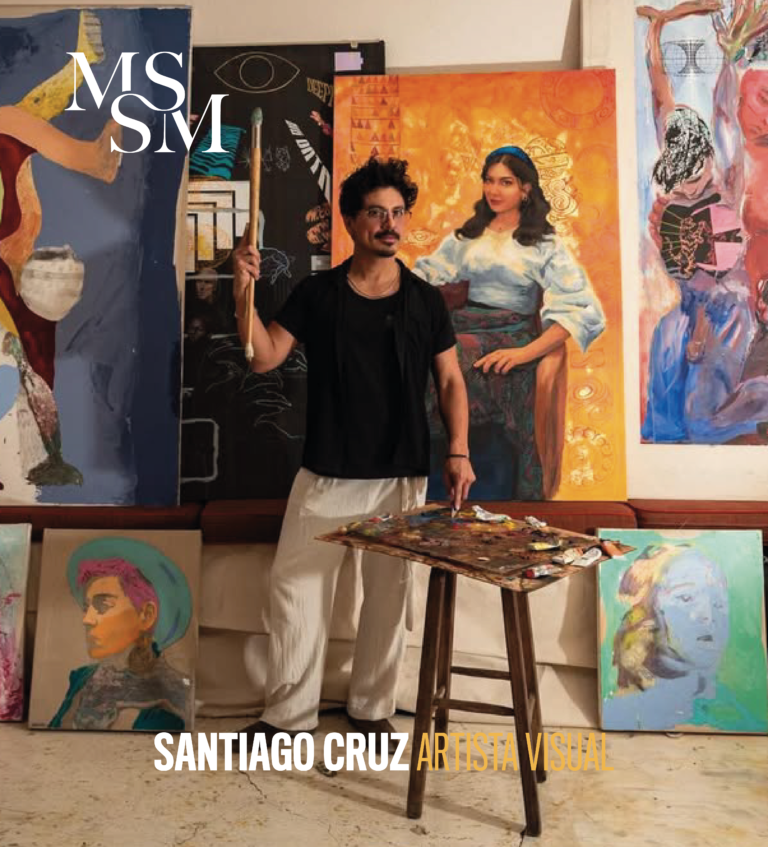
Santiago Cruz is a painter and multidisciplinary artist trained in the classical academic tradition in Florence, whose career has been shaped by years of work in India, Dubai, Thailand, Berlin, and currently San Miguel de Allende. His work unfolds in series—each conceived as an autonomous universe—where color is treated as a living material and mythical symbolism remains latent beneath the surface. Inspired both by the history of pigments and by contemporary materials research, he incorporates iridescent nanopigments and ultra-black formulations to expand the painter’s luminous “keyboard.”
Raised between U.S. military bases and the tropical Caribbean landscape of Panama, his earliest visual education emerged from a wall lined with bound volumes of National Geographic and from a family culture centered on observation, curiosity, and craftsmanship. He combines rigorous foundations—such as Bargue drawing and tonal structure—with a practice of “unlearning” oriented toward intuition and chromatic intensity.
In recent years, he has held solo exhibitions in Panama, spent five years immersed in Berlin’s experimental art scene, and produced large-scale works in Mexico. His current vision connects exhibitions with workshops and scholarships for young people, creating a studio ecosystem that supports emerging artists across disciplines.